views
在 APP 的 views.py 中书写相关的 view 逻辑, 需要实现:
- url 与 view 的匹配
- view 的渲染返回
Your view can read records from a database, or not.
It can use a template system such as Django’s – or a third-party Python template system – or not.
It can generate a PDF file, output XML, create a ZIP file on the fly, anything you want, using whatever Python libraries you want.
urlpatterns
位于 urls.py 中, 实现 url 与 view 的匹配
父域
- 支持 APP 内的维护: 使用 include 在根 urls.py 中导入即可
from django.urls import path, include
urlpatterns = [
    path("admin/", admin.site.urls),
    path("oa/", include("OA.urls")),
]
子域
- app 内部 urls.py 需要完善: app_name, urlpatterns 属性
- app_name 属性的设置用于外部引用非硬编码 url 时指明命名空间
- name 属性方便外部引用目标 url
- 支持占位符匹配:
from django.urls import path
from . import views

app_name = "OA"
urlpatterns = [
    path("", views.welcome, name="index"),
    path("depart_list", views.depart_list, name="depart_list"),
    path("depart_list/add/", views.depart_add, name="depart_add"),
    path("depart_list/<int:depart_id>/edit/", views.depart_edit, name="depart_edit"),
    path("depart_list/delete/", views.depart_delete, name="depart_delete"),
]
在 template 中引用时, 指定命名空间 app_name
<a href="{% url 'OA:depart_edit' depart.id %}">Exception
view 处理时可以显示的 raise an exception, 最常见的就是 404…
from django.http import Http404

def detail(request, question_id):
    try:
        question = Question.objects.get(pk=question_id)
    except Question.DoesNotExist:
        raise Http404("Question does not exist")
    return render(request, 'polls/detail.html', {'question': question})
404 shortcuts
It’s a very common idiom to use get() and raise Http404 if the object doesn’t exist. 因此 django 也为此提供了更加简便的封装
from django.shortcuts import render, get_object_or_404

def detail(request, question_id):
    question = get_object_or_404(Question, pk=question_id)
    return render(request, 'polls/detail.html', {'question': question})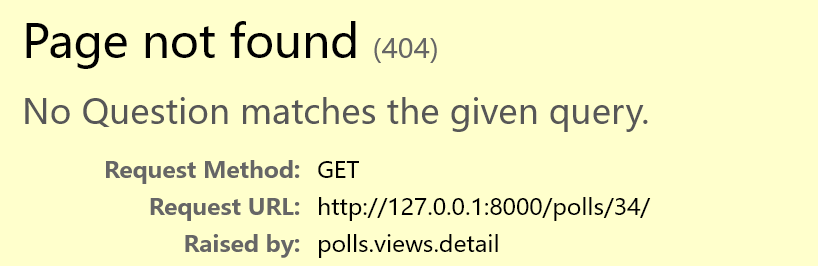
Generic Views
Q: 有些 View 的功能十分普遍, 例如展示一个列表的数据, 或者展示一个 Object 的详细信息, 针对这类 View 其后台操作基本一致: 获取 object 然后渲染模板页面, 因此可以进一步进行封装
A: Generic views abstract common patterns to the point where you don’t even need to write Python code to write an app. For more details…
本质上就是缩减了后台与数据库交互的代码, 展示的模板代码基本上还是需要靠自己的…, 我原以为也能有一套默认的模板进行 generic 的展示
Quick Start
- 将能够优化的 View 封装为 generic 的子类
# ListView: display a list of objects
# 通过 get_queryset 获取要展示的列表
# 通过 context_object_name 配置模板中对应的列表属性名称
class IndexView(generic.ListView):
    template_name = 'polls/index.html'
    context_object_name = 'latest_question_list'

    def get_queryset(self):
        """Return the last five published questions."""
        return Question.objects.order_by('-pub_date')[:5]

# DetailView: display a detail page for a particular type of object
# 通过 model 属性确定要展示的 object
# 默认的寻找目标对象的条件为主键 pk, 因此需要通过 GET 传入
class DetailView(generic.DetailView):
    model = Question
template_name = 'polls/detail.html'- 更改 urlpattern, 注意 pattern 中的参数要去匹配 generic 中的参数配置
urlpatterns = [
    path("", views.IndexView.as_view(), name="index"),
    path('<int:pk>/', views.DetailView.as_view(), name='detail'),
    path('<int:pk>/results/', views.ResultsView.as_view(), name='results'),
    path('<int:pk>/vote/', views.vote, name='vote'),
]
ListView
Display a list of objects
- 通过 get_queryset 获取要展示的列表
- 通过 context_object_name 配置模板中对应的列表属性名称
class IndexView(generic.ListView):
    template_name = 'polls/index.html'
    context_object_name = 'latest_question_list'

    def get_queryset(self):
        """Return the last five published questions."""
        return Question.objects.order_by('-pub_date')[:5]
DetailView
Display a detail page for a particular type of object
- 通过 model 属性确定要展示的 object
- 默认的寻找目标对象的条件为主键 pk, 因此需要通过 GET 传入
class DetailView(generic.DetailView):
    model = Question
    template_name = 'polls/detail.html'